In the early days of the AI revolution, the cloud was king. Every business, from Silicon Valley startups to Fortune 500 giants, rushed to integrate third-party APIs. However, as we move through 2026, the conversation has fundamentally shifted. The "Cloud-First" mentality is being replaced by a "Privacy-First" mandate.
For American entrepreneurs and tech leaders, the core question is no longer just what AI can do, but where the data lives while doing it.
The Rise of Data Sovereignty
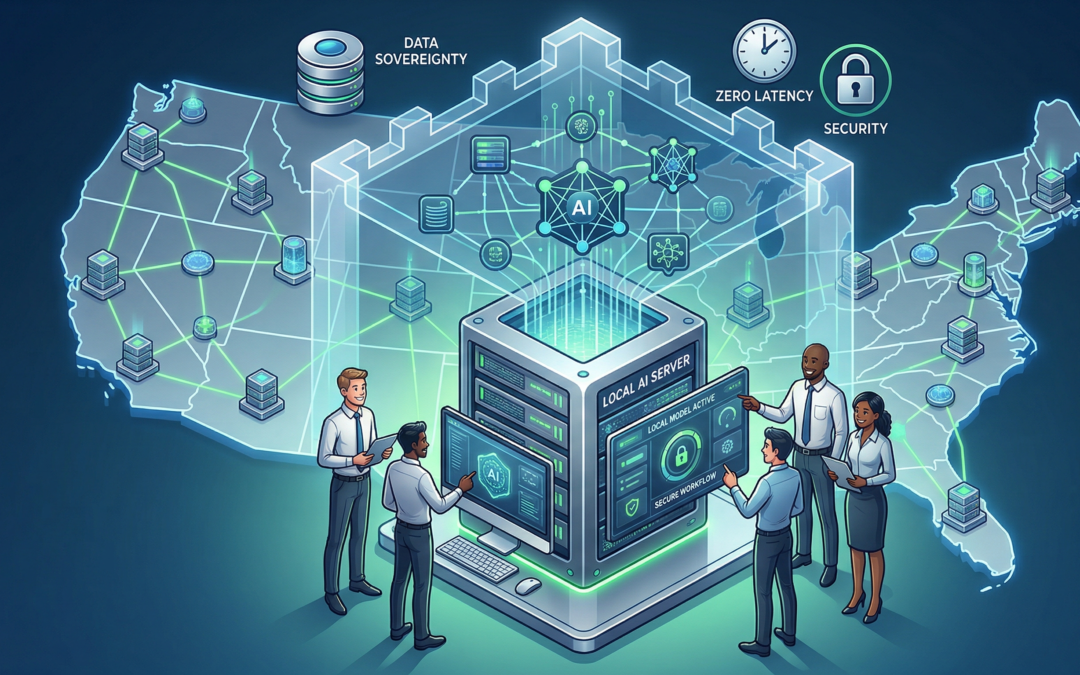
Data sovereignty is no longer a legal buzzword; it’s a competitive advantage. With increasing regulations and the rising cost of data breaches, local AI implementation has become the gold standard for security-conscious firms.
By running Large Language Models (LLMs) locally or on private clouds, businesses gain three critical advantages:
- Zero Data Leakage: Your proprietary prompts and customer data never leave your controlled environment.
- Reduced Latency: Processing at the edge eliminates the "round-trip" time to external servers.
- Cost Predictability: You bypass the volatile token-based pricing of major API providers.
Key Strategies for Local AI Implementation
If you are looking to transition your workflow, consider these three pillars of the 2026 AI stack:
1. Hardware Optimization
The release of specialized NPU (Neural Processing Unit) chips has made it possible to run sophisticated models on standard workstations. Investing in high-VRAM hardware is now a capital expenditure that pays for itself by eliminating monthly API subscriptions.
2. Open-Source Model Fine-Tuning
Models like Llama 4 and its successors have proven that open-source can compete with proprietary giants. US businesses are increasingly fine-tuning these models on their own internal documentation to create hyper-specialized "Internal Brains."
3. Hybrid Cloud Infrastructure
For tasks that require massive compute power, a hybrid approach—keeping sensitive data local while using the cloud for non-sensitive, heavy lifting—is the most scalable path forward.
The Verdict for 2026
The trend is clear: The future of AI is decentralized. Companies that master local AI implementation today will be the ones that own their intellectual property tomorrow. In a landscape where data is the new oil, keeping your "refinery" in-house is the smartest move you can make.