Remember when blockchain was just about volatile coins? By April 2026, that era is a distant memory. The defining trend of this year is Real-World Asset (RWA) Tokenization. We are witnessing the great migration of traditional finance (TradFi)—everything from government bonds to commercial real estate—onto decentralized ledgers.
The promise is alluring: 24/7 liquidity, fractional ownership, and instant settlement. However, the reality of moving a physical skyscraper or a complex private equity fund onto a blockchain is fraught with technical and regulatory peril.
For businesses looking to capitalize on this trillion-dollar opportunity, success isn't determined by the choice of blockchain alone. It is determined by the custom integration layer that connects the messy physical world to the immutable digital one.
The Missing Piece: Why Python is Critical for RWA Success
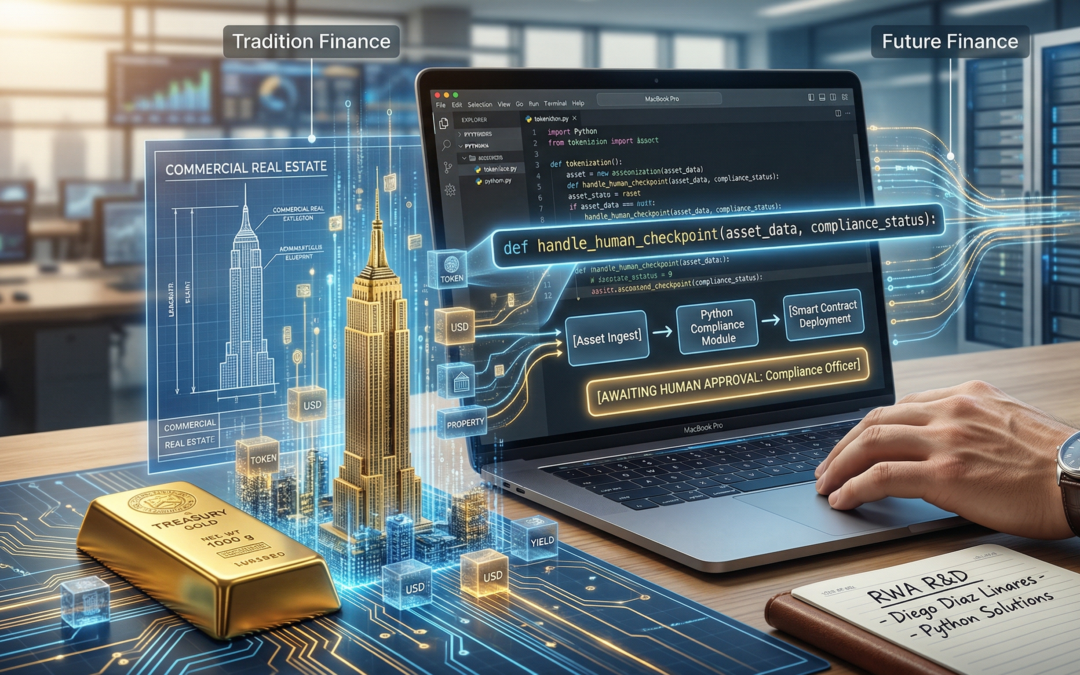
Tokenizing an asset is easy; keeping that token legally compliant and operationally functional is hard. When I build custom Python solutions for blockchain integration, I focus on that crucial middle layer.
Python is the undisputed language of choice for RWA tokenization backends for three vital reasons:
- Complex Data Handling: A tokenized real estate asset needs to ingest data from hundreds of sources—property appraisals, maintenance records, rental income, and local legal updates. Python’s data prowess makes handling these diverse data streams seamless.
- Regulatory Compliance (Programmable Law): Compliance isn't a "set and forget" feature. US regulations shift constantly. Using Python, we can build custom compliance modules that act as a gateway, automatically updating smart contracts or pausing trading based on real-world legal changes.
- Cross-Chain Interoperability: Your asset might need to live on Ethereum today but interact with a specialized DePIN network tomorrow. Python excels at acting as the "glue" that allows these disparate systems to communicate.
Why Tokenization Still Needs a "Human-in-the-Loop"
We have arrived at a critical juncture in 2026. Many early, fully-automated RWA projects failed because they trusted AI and smart contracts too much. They forgot that the real world still requires judgment.
A smart contract can execute a transfer of ownership instantly, but it cannot verify if a building's roof has collapsed or if a tenant has defaulted on rent. In my own store, Aura Wedding Cards, I use AI to enhance my designs, but every final product goes through a rigorous human quality filter. I apply this exact philosophy to blockchain development.
An RWA system must have built-in Human-Guided Checkpoints. Before a significant dividend payout is executed by the code, or before a token is re-priced, there must be a mechanism for a human expert—a fund manager or compliance officer—to verify the real-world data underpinning the transaction. We use Python to build these crucial review interfaces.
The Future is Hybrid: Custom Code, Expert Guidance
The tokenization of RWAs is the normalization of digital finance. It is no longer "experimental." To succeed in this landscape, you need more than generic solutions or unguided AI. You need robust, custom architecture built by experts who understand both the code and the context.+1
Are you ready to tokenize your assets or integrate your business with RWA protocols? I specialize in crafting secure, Python-based blockchain integration layers that don't just "plug" into the chain, but provide the strategic, human-supervised control you need to protect your wealth and reputation. Let’s build the future of finance, responsibility.